Freshly Dusted

  • Home
A father's hands, cupping his child-to-be. His turn to name her, while the mother rolls her eyes in pleased exasperation at his indecision. 

He searches for the perfect name, pointing out street signs and writing down the names of his coworkers' kids. Somewhere around here, he'll find the inspiration, something beautiful for his daughter. He wants it to be perfect, the first gift he gives her, one that will stay with her for all her life.

His other two daughters help, throwing out names that come to mind. 

"Lauren!"

"Elizabeth!"

"Kylie." 

He hesitates on the K, a name to match his daughters. Their names both mean pure and start with K, and he likes the idea. Not Kylie, but something else?

The answer comes at church, when one of the kids from Sunday school runs through him by accident, and he leaps out of the way as his youngest shouts her name, "Kaitlin, come back!" 

"Kaitlyn," he says. It fits. 

It too means pure. 

He doesn't tell anyone at first, turning the name over in his mind again. With his last daughter, he hadn't known until he stood above her and saw it in her eyes. Still, though, it had fit. 

This time, he knew before he saw her. 

The other women in his family keep proposing ideas.

"Clara."

"Rebekah."

"Rylie." 

His oldest rushes in one day, shouting in glee. "I've got it! Her name's going to be Olivia!" 

He tries it on. It fits too.

On the day he holds his youngest daughter in his arms, he doesn't cry, smiling as he pulls her close. Could any love compare to this? 

Kaitlyn Olivia.  It's her. 

His daughter. 

Years pass. Hardship grows, and easy smiles crush themselves away. His daughters age, laughing and crying and screaming and fighting and loving and learning all at the same time. Through it all, he's there. For their first steps, the jokes that make no sense, the 3am sicknesses, the late night discipline, the bedtime hugs, the music lessons, first days of school, history sessions, rising and falling friendships, religious conflict and more. 

His daughters age away from him, and he figures that means he's doing his job right, teaching his young women to be independent and sufficient. 

Then one day, Kaitlyn Olivia sends him a message, unwilling to face him with her words. They sting. 

His daughter doesn't want to be his daughter anymore. 

"Call me, my boy. Call me Ak. I hate my name," his child writes to him.

The world has told him that if he truly loves her, he'll call her a boy, he'll call her by the name she chooses. One that means powerful instead of pure. One that means individualistic over innocent. 

Over the years, he has borne many blows. The blame, accusation, and hurt of his children. He has let them sharpen their claws on him, knowing that in this way, he prepares them for a world where they will need them. He's seen them tear a family apart and denounce it for all to hear. He's seen many good gifts taken and used, then lost and broken in days. Yet through all, he has loved and loved.

Yet this? How could a father lose his daughter? 

He tells his daughter he loves her. That she will always be Kaitlyn to him. That this was the name he had given her. She didn't have to use it, but surely she could understand? How for him, there was no other name? 

Maybe she sensed the pain in his plea, and she nods. She lets him have this. 

And though she still introduces herself as Ak, she lets him call her by the name he gave her, and when he says it, she still finds it beautiful.
  • 0 Comments
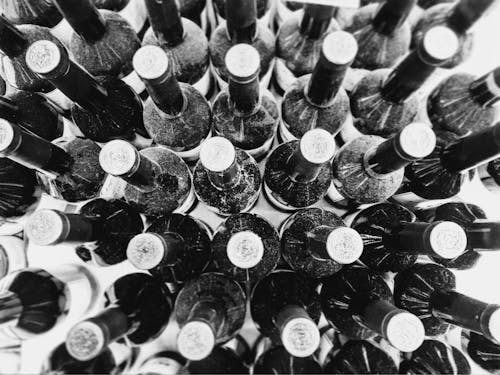
Black Wine Bottles

Bottled Up

By Asche Keegan


“You might as well come in,” I say. “I’ve thought about every possible ramification of your coming, and I’ve determined I can no longer deny your existence outside my door. I wanted to make sure I wasn’t inviting in a ghost. Not that those exist, of course, but I’m sure you know what I mean.”

He coughs, stooping in and glancing around. Dust and cobwebs cling to every wall, and a broom lies abandoned in the corner of the room. Random objects clutter every desk, each also covered with the dust and grime of time. His gaze rests on the ceiling though, where glass bottles swirling with multicolored liquids are taped to nearly every crevice of the roof.

“It leaks sometimes,” I say. “But don’t worry, there’s bottles in your room too, so you shouldn’t have any problems.”

He nods, then asks, “Do you live here?”

“Have for years.”

He looks around some more, surveying His new home.

“Well, are you going to come in?” I ask, gesturing with the door. “I decided in your favor, didn’t I? You don’t have to be so reticent.”

“Are you sure?”

“Of course. What, are you a vampire or something?” I say it like it’s a joke, but it falls flat, and He merely smiles and steps inside.

It happens so quickly. Thunder rolls, the room trembles, and above me, every bottle taped to the ceiling shatters at once.

Coming down, the glass cuts me in every way, and I instinctively sink into a defensive crouch to wait it out. Blood soaks my shoulders, but it’s the bottled liquid that stings, sizzling in the wounds. I bite back a cry, on the verge of tears, but I refuse to cry in front of Him. Eventually, I risk a glance at Him.

He’s just standing there, unfazed, offering me His hand and pulling me to my feet. “Are you okay?”

“Do I look okay?”

He looks worried, rooting around in His bag. “I’ve got some bandages in here, hold still.”

“No, I’m fine, I’m fine, I’m fine,” I say, panicking. “Don’t touch me. Did you do that?”

The emotions are coming in now, and this is the part I hate the most. It’s clouding my judgment, blanketing my actions in irrationality, pulling apart every carefully chosen word and argument.

“I’m fine. I’m fine. You can drop your stuff in your room. And after that, you might as well help me put my bottles back up. After all, if you’re going to live here, you might as well make yourself useful,” I say.

Yet later, even as I’m balancing on the top rung, stretching over three or four different items to affix my bottles to the ceiling, he doesn’t help. Doesn’t even hold the ladder.

He does sweep up the glass though.

A few days go by, and we form an uneasy truce. We don’t really talk much. He stays in His for the most part, and I stay in mine, coming out only to change the bottles when they start filling up too much.

Then I decide that if we’re going to live together, I might as well get to know Him, so we start talking. He proposes questions that exercise my imagination. We debate spiritual intricacies and life choices. Morals and ethics. I go for the middle ground, He for the black and white. And throughout it all, he challenges and delights my mind.

And it is through my mind that He reaches my heart. My roof starts leaking more, but it’s a purple liquid I’ve never seen before. Once, I stretch my hand under the leak, just to see what it feels like, and it is the most wonderful feeling I’ve ever experienced. I don’t really know how to respond, so I shy away, and I reinforce the tape and the bottles to make sure it stops leaking into my house.

Sometimes, He comes in and dusts, and I watch him, confused.

“Why are you dusting?”

“It’s dirty, and I’m cleaning it,” He responds.

“It’ll just get dirty again, you know. What reason is there to cleaning?”

He just shrugs, and I leave him to His work, baffled. Afterwards though, as I linger in those places, I run my fingers over the clean brass, wondering why I never thought to dust before.

Yet somehow, resisting every step of the way, I learn to love this stranger in my house in a deeper than words sort of way. If He even goes for a walk, I look forward anxiously to His return. He helps me with everything around the house except changing the bottles, though He’ll sometimes hold the ladder to make sure I don’t get hurt.

It gets to the point where I wait up for him, where I’ll get up early to seek him out or we’ll stay up talking long into the night. One such time, I whispered to him, looking more to the stars than to him, “I’d do anything for you. I’m all Yours.”

And He said, “Anything?”

“Anything,” I responded.

“All mine?”

“All Yours.”

He smiled.

Then one day, He walks in as I’m sweeping, and again, every bottle above me shatters. As it slices into my back, I fall apart, screaming. The familiar pain burns in old scars, drenching me in the sticky-sweet smell of blood and emotions. But this time, it aches and burns more than ever before, the collected purple stinging every mark and bruise.

He runs to me and picks me up, carrying me to safety while purple rain continues to gush. I start crying, fighting against Him as He bandages my cuts. “Stop, I need to stop it,” I say, but He doesn’t let me run away until my wounds are covered. I stagger from my couch, limping back to my ladder, grabbing more bottles to plug the holes.

“Why are you trying so hard to keep it out?” He asks.

I’m crying, trying to hold on to some semblance of logic, and it’s abandoning me in droves. “None of that belongs in here,” I say. “It’s ruining my carpet. It’s horrible and smells disgusting.”

He glances at my carpet, and I follow. It’s odd, but in tears, I see it how He must have seen it: ripped, tattered, stained. I look around the rest of the house too, at walls once covered in cobwebs, ornaments once decorated in dust. Glimmering lightbulbs shine where my musty chandelier hung, and the room feels almost cozy. What once was dry and austere is now cozy—almost alive, even when dripping purple.

“The liquid isn’t what cuts you,” He comments. “It’s the glass.”

“It never used to crack like this before you came along,” I say, angry from the red liquid seeping over my shoulders from the leaks. “I was doing just fine before you came along, destroying my house, changing everything. Quit breaking my bottles!”

Yet, in memories, these bottles have shattered many times, carving the same scars deeper into my back every time. Every inch aches from miles of pain and maps marked far beneath my skin.

“I used to play in the rain,” I say. “I used to bask in it.”

“Why don’t you still?” He asks. I teeter on my ladder, and He holds it for me, ready to catch me if I fall.

“It hurt.” I think to the first time blood seemed to seep through the ceiling, pouring around me, scarring and burning my skin. I screamed, running away, but my entire roof was leaking, pouring everywhere.

It happened again and again, leaking nothing but pain, betrayal, hatred, anger, misery, grief, regret, fear, desperation, and more. I had to contain it somehow, so I made bottles, sticking them up there, taping them to the ceiling, trying to stop the rain from falling in.

“I can fix this,” I had said. “I can fix this all on my own.”

And even if the bottles got too heavy and fell over, the glass still didn’t hurt as bad as what was inside them. Sure, glass stopped the few good things too, but that was a small price to pay.

I climb down the ladder, crying, and He catches me, holding me tight.

“What do you do with the rest of the bottles?” He asks.

 Wordlessly, I limp to the back room, an off-limits place. I pull the key from around my neck. It’s locked just so I can say, “I fear nothing. I regret nothing.”

Now that the rest of my house is clean, I can smell what the inside reeks of, and I wrinkle my nose, repulsed.

He pulls a string, and a single lightbulb sputters on, illuminating a room of thick shadows, dust, and cobwebs.

As far as the eye can see are rows of bottles, lined up. Each is corked and wrapped in three or four layers of plastic wrap, just like I did in chemistry labs to keep samples uncontaminated.

Each swirls with hundreds of colors, and I pluck the latest fragment of glass from my clothing and place it on the shelf next to all the orderly rows.

“There’s no organization except by time,” I say. “Just colors and bottles, all neatly contained.”

“Do you ever go back and open them?”

“Not really. Only the ones that are mostly blue and green,” I say. The colors swirl around, and only now do I notice just how rare the blue and greens are. I almost don’t ask, but I whisper to Him, “Why is there so much red?”

He doesn’t answer, merely starts trailing His fingers along the shelves. He walks halfway down the hall before pulling a specific bottle from the shelf. He takes it and three or four others and walks back to me.

“You said you would do anything for me?”

“Yes.”

“Do you mean that?”

“Yes, absolutely. But what does that have to do with anything?”

He takes a bottle that is almost entirely red, and He uncorks it, instantly filling the room with the sickening scent of festering pain. Before I can protest, He dumps it over my head, and it soaks through my skin, burning unlike anything I’ve ever felt before.

I scream, and through it all He holds me, a vague, unseen comfort. In the first’s peak, He pours the second bottle over me, which burns even greater than the first.

“Stop! Make it stop!” I shout. But He continues, until each of the four has poured over me.

“Stop, stop, stop, stop, please, please!” I weep, but He does nothing, and I am forced to face the truths I’ve hidden from for so long.

In fully embracing these emotions, the universe ends in one fell blow. I cry for the pain I have caused. I feel every regret I’ve once had. I see every way I’ve darkened the worlds of those I said I loved. I see all the hatred I’ve ever doled out, every life I’ve harmed.

It cascades endlessly, and I groan in a pain I can’t voice, my soul screaming.

And as He tries to pull me closer, I pull further away. “Stop, don’t touch me!” I shout. “It’ll just get on you too. Don’t come near me. Don’t come near me. Don’t, just don’t.”

I curl into a ball in a corner of the room, sobbing. Still, He draws near to me, and in His hand, He holds a bowl, the likes of which I’ve never seen before. He dips in His hand, and it flows white.

“You are forgiven, if only you ask,” He says.

In that white, I see His goodness, and I see my evil. I picture this house of mine He’s been living in, falling apart in every corner. It’s ruined and destroyed, covered in dust and dirt and mud. It holds nothing of note but tattered carpets and broken furniture. And somehow He’s still here.

“I can’t. Go away. Get out of my house. I don’t deserve to have you here. It’s not good enough. I’m not good enough.”

“You only need to ask.”

He waits there, crouching beside me, but I ignore him. I ignore him for days, crying over this pain, shivering in its hurt, feeling every cut and bruise with an intentionality of never before. I cry over the smallest things, each thought hitting me harder than the ones before. I think of every moment with my sisters and mourn for the love I haven’t given, for the pain I’ve caused.

Two or three weeks later, when I feel like I might be able to stand again, I turn around, thinking He must have left by now.

He’s still waiting there.

“I’m so so sorry. I can’t—I can’t express it—”

And as I struggle to form the words, He pours His bowl over my head, simply covering me in His forgiveness.

Under its weight, every red line flows away from my skin. Every orange, pink, and yellow scar, every mark left by all these bottled hurts, and every piece of shattering glass fades away.

I marvel over new skin, left spotless and mark-less.

“I’ve been waiting a long time to do that,” He says.

He stands, offering me His hand, and I take it. Together, we leave the room, and I enter a far different one than I left behind.

“You have to let the rain fall sometimes,” He says. “See, that carpet is completely ruined. We’re probably gonna need a new one. And if we’re getting new carpets, we might as well get some new armchairs too. I mean, we might as well rebuild the entire house.”

“What—what about the other bottles?” I ask.

“We’ll get to those eventually,” He replies. “Some will probably stay bottled up for longer than others. But until then, let’s maybe set the glass aside.”

“But…but the rain,” I say.

“Hmm, maybe you just need a new roof,” He says. “Besides, anything that comes in this house has got to go through me first.” He laughs, gesturing as if in a mock battle with an adversary.

The sight strikes me, and for some reason, I throw back my head and laugh in joy, and the rain leaking in feels cool and good on my spotless skin. It’s no longer weighty, but light, flowing right off my back.

  • 1 Comments

https://images.unsplash.com/photo-1516509975092-74c4b6354728?ixlib=rb-1.2.1&ixid=MnwxMjA3fDB8MHxzZWFyY2h8OHx8ZGlydCUyMHJvYWQlMjBmZW5jZXxlbnwwfHwwfHw%3D&auto=format&fit=crop&w=600&q=60

Tarmac

By Asche Keegan


“Do you always strike matches on your shoe?”

Rick glanced over at her. “You ever smoked before?”

“No.”

“Figured.”

He lit his cigarette and took a drag, turning and blowing the smoke into Lilith's face. She scrunched up her nose but didn’t cough, and he stared at her a couple of seconds longer before handing her the match.

It took her a couple tries, but she lit hers too, waving the match out and passing it back to him. She watched what he did and tried to copy it, but when the smoke filled her mouth, suffocating her, she couldn’t stop herself from the coughing fit that followed. He didn’t move, even as she leaned to her knees, retching and gagging.

“Rick, you could’ve warned me ‘bout that part," she staggered out when she could breathe.

“Figured you’d at least seen a couple movies that’d told ya that much.”

“You know I don’t watch movies.”

“Read enough books then.”

“They don’t talk about smoking in the kid's section of the library,” she retorted.

“The one back in Durant?” he asked.

“Yeah.”

There was a moment’s pause, and Lilith coughed again, her lungs burning from the inside out.

“What’s it like?” he asked.

“What’s what like?”

“The library. I’ve always wanted to visit one.”

She glanced over in surprise. “You mean you’ve never been to a library?”

“Nah. Not that big of a deal, but I just wanna know. Now that I’m off to see the world or whatever.”

“Well…” she thought about it a second. “They just got a lot of books everywhere. Shelves and shelves of them. And they have tables set out for people to kind of read or sit down and talk to each other—quietly, of course. We also had newspaper racks and magazines.”

“That sucks.”

“What?”

“Just sounds boring. What do you even do?”

“Read?” she asked.

He shrugged, pulling on his cigarette again. This time he blew the smoke upward, and the two of them watched it whiffing away into the cloudless sky.

“Guess I'm not much of a reader either,” he said.

“Ah.”

“Mhm.”

Lilith glanced over at his backpack, checking again to make sure all the zippers were sealed shut so nothing would fall out. She glanced back towards his face, seeing nothing but his chapped lips. She looked back to the tarmac instead, where Main’s right turn arrow stretched out under her shoes.

A truck roared down the road, hitting every pothole, it seemed. Though Rick stuck his thumb out, it didn’t stop, and the two of them watched it roar away downhill, sending puffs of dust behind it in its wake.

“I did always like the goldfish though,” Lilith said. “We used to tap on the tank and watch them swim around in there. If we tapped on the top though, they’d always come flying upwards, thinking we were giving them food or something.”

“Cool."

“But one day, we came to the library a little earlier than normal—right as the doors opened—and the kid’s librarian was running late or something,” Lilith babbled on. Something about the story made her want to get it out, to keep talking.

“We ran straight to the tank, like we normally do, and one of the fish was just floating on the top of the water.”

Rick shook his head. “Had a couple fish myself. Not a fun moment.”

“Yeah, well when the librarian came over and saw us crying our eyes out, she told us the fish was just sick and needed a doctor or something, and she pulled out a coloring book and some crayons and had us distracted in no time. I'm telling you, librarians should rule the world. But whenever something bad happens, I still think about that fish. Just floating there.”

While she was talking, Lilith had been looking around, fiddling with her hands and the cigarette as if it could change the story. As if somehow it was still alive, happily swimming its little head off.

“Do you have to go?” she asked. “Can’t you just stay here with me one more day?”

He didn’t answer, just rolled up his sleeve, showing off the burns and scars his father had forever tattooed into his skin. “I think you should take another drag of that,” he said, gesturing at the cigarette still in her hand. “It helps take your mind off things.”

Absently, she glanced at it, shaking her head.

“I’m going with you,” she said.

“No, you’re not.”

“‘Where you go, I will go, and where you sleep, I will sleep.’”

“What’s that from?”

She shrugged. “Ruth.”

“Thought you said you weren’t Christian anymore.”

“Doesn’t mean it’s not a good line.”

He leaned against the fence, the rakish grin she knew him for glancing onto his face before it disappeared again. “Only you, dear. Only you.”

Emboldened, she continued. “We can go to a library first. You can see for yourself what it looks like. Run your hands across the books. At some you can even check out video games and stuff like that. Libraries are good if you’re homeless because you can have fun and spend all day there. Where it’s not too hot or cold.”

“I won’t be homeless.”

“Sure, you won’t.”

“I’ve got connections.”

“Oh, your high school bully gonna let you in to his gang or something?”

“Shut up, Lilith, you don’t know what you’re talking about.”

“Yes, I do! I’ve seen all this happen before. I know what happens.”

“You’re just scared for no reason.”

“I don’t want you to be the goldfish at the top of the tank, Rick!” she shouted.

The shout echoed off the land surrounding them, and again, Lilith realized how close she was to Rick's face. A larger part of her than she cared to admit wanted him to kiss her, to promise his life, loyalty and happiness. To stay beside her for as long as they both lived.

And Lilith had a feeling that if he did kiss her then, he would stay in this town forever. His dad would keep beating him up, but one day they’d sneak off together to get married and grow old. But every day of their lives, his heart would still be here in this moment, leaning against this fence, thumb stuck out for a ride to a place far away.

He seemed to sense the moment too, and he pulled back. “I’m already the goldfish,” he said. “I’ve been swimming around and around in this cage for my entire life, opening my mouth and waiting to get fed every time somebody knocks on the top of the tank. You might be fine with that, but I just can’t do that anymore, Lilith. I’d rather be dead in the ocean than swimming in circles.”

A bird wheeled above them, and they watched it.

“But we could still go together,” she said weakly. “See the library. All the libraries.”

He fumbled around in his jacket, before pulling out his matchbox. Once again, he removed a match and struck it against his shoe, holding out the flame in front of her. “This is me,” he said. “You can’t put a flame with books, or they’ll burn. We all belong to certain places, and if we try to hard to change that, there’ll be nothing but fires everywhere.”

He dropped it to the tarmac, grinding it under the heel of his boot. She couldn't think of anything else to say that might convince him not to go.

Another truck raced by, missing more or less half of the potholes, and Rick stood, sticking his thumb out. The truck slowed down, window rolling down.

“Lookin’ for a ride?” the driver said in a deep Southern accent.

Rick nodded. “Yes, sir, if you’d be kind enough to offer.”

“Where you going?”

“Dallas.”

“That’s a right ways away.”

“Yes, sir.”

“Both of y’all?”

“No, just me.” He didn’t even glance back at her before he said it. Didn’t even give her a chance to argue.

The driver sized him up. “Well put out the cig and get in the back, and I’ll get you as far as Rockwall.”

He nodded, then turned back to Lilith. “If you don’t mind?”

She handed him the rest of the cigarette, and he pinched it out along with his, carefully putting them both back in his container.

“Guess this is goodbye.”

“You’ll write from time to time, right?”

“We’ll see. Don’t know when I’ll have time to write. I’ll make sure you know I’m alive, though, don’t worry. And remember, I’m not a goldfish.”

“You’re worth a lot more,” she murmured.

He nodded, stepping back and saluting her. “See you later, alligator.”

“After awhile, crocodile."

He hopped in the back of the pickup, offering the driver a thumbs up in the rear view mirror. As the truck sputtered away, picking up speed, Lilith waved until it was out of sight.

“Love ya, Rick,” she called, even though no one heard except the birds. And even though no one but the fence saw her pick up the remains of the match, she cradled it in her hands as she walked the tarmac back towards home.

  • 2 Comments

man in white button up shirt wearing green and brown camouflage hat 

Cabernet

By Asche Keegan


“You’re a racist, Bibbs,” I said, tipping the glass towards the ancient oil painting. The portrait continued to stare moodily into the distance, perhaps pondering a world where someone else might be as great as he.

“And now I’ve gotta get rid of you somehow.” I swirled the glass, watching the Cabernet slosh back and forth. The sight made me queasy, but I downed the liquid anyway, not once taking my eyes away from Captain Bibbs. I choked on the swallow, coughing it up back into my lap, heaving and bellowing the thunderous coughs of a dying man. Once subsided, I leaned back again, turning my gaze from the painting to the book in front of me.

I opened it to the first page.

“Let’s recount your sins. You endorsed slavery and owned many slaves of your own. You are directly responsible for the deaths of hundreds of African Americans in our own country. You served in the Confederate army as an officer for three years. I could go on.”

I paused, glancing back up at the man on the wall. “But you’re also the reason children go to school. And you saved many lives from being lost with your brilliant wartime tactics. You created a legacy. Built a business from the ground and became a national powerhouse.”

I couldn’t think of the other things.

“You’ve got some good pieces to ya, Bibbs, but you’re still a racist.”

I wanted him to respond, to tell me what to do. I could picture the growl he’d make—an echo of my great grandfather’s snarl whenever we came up to him after church. We’d always shake his hand politely before shrinking back against the pews. Until the day he died, he’d see us and throw back his head and laugh.

But in this scenario, I could even imagine what Bibbs would say.

“You filthy lot carrying on with all manner of immorality. There are women walking about with virtually nothing on. Where are the masters for these slaves?”

He’s probably throw the n-word in there a couple of times too.

I took another dreg, swallowing the last of what was in the glass. Almost without looking, I refilled it.

“But what am I supposed to do with you? Half the people I know want me to get rid of ya. Sell you off to an auction and donate the money for reparations, you know?” I laugh at myself. “No, you wouldn’t know. You’re the reason I’d have to give up $50,000 in the first place. I hate this.”

With a start, I realize the cup is dry again, so I set it aside, pulling my head into my hands. I sit there, propped up halfway on the armchair for several minutes.

The entire time, Bibbs taunts me. “I may be a racist, but I’m no coward. I’m not the one who ran away from war. I fought even when six of my bones were broken. And instead, you intentionally broke your bones to stay home. You hurt yourself to stay home. Yer a coward.”

“I’m not a coward. You are,” I retort, petulant as a child.

“You are a child.”

“Don’t remind me,” I groan.

I look up again, almost expecting Bibbs to be looking down on me, but no, he’s still looking up, off to his right, that snooty “holier-than-thou” look on his face.

“But you killed hundreds of people, Bibbs. That don’t make you brave, just a bully.”

I poured myself another glass, relaxing a bit as the cabernet settled in.

“But some people want me to keep you. Saying you’re an artifact. A piece of history that can’t be re-written. Someone to be proud of.”

“They mean to say they’re prouder of me than of your sorry ass.”

“Hey, at least I’ve got one. You’re just a head on a wall.”

“And I died with my head on a stick. You’re gonna die fat. In your bed. Screaming.”

“But at least this sorry ass will be attached,” I replied. It was a poor comeback but the only one that came to mind.

Almost without thinking, I stood, the cabernet sloshing in the glass. I approached Bibbs, keeping eye contact. “You’re an utter fool. The butt of too many of my problems.”

“If you were capable of solving your own problems, you wouldn’t need to blame them on me.”

“But you know what, I know better than you. I’m smarter after all. I don’t kill people in the name of protecting a family—

“Because you don’t know have one or because you don’t know what honor means?”

“—Because I’m just f*cking better than you are! You’re a racist, a sexist. A misogynist. You’re all the things. I’m just better. And you. You were a terrible person.”

“And you are only a pathetic one.”

The words hung in the silence.

Then, again almost without knowing what I was doing, I had my hands gripped around the sides of the painting, attempting to yank it from the wall. The wine spilled over the edge falling onto and staining the $50,000 antique, but in the moment I didn’t care about antiques or money or reparations or any of it. I just wanted him gone.

I pulled it off, stumbling backwards and hurling it down onto the floor ten feet away from me. A splintering crack filled the room and staring at the broken remnants of the giant frame, the conversation came fully into focus.

All of it.

Even the imagined parts.

Now it looked like red dripped from Bibb’s haughty eyes. I wondered if that’s what it looked like when he got his head impaled.

I laughed, a little unstably before downing the rest of the cabernet. Tossing the glass onto what remained of the frame, I went to bed.

  • 7 Comments

person standing on sands

Soul Searching

By Asche Keegan


I’ve been soul searching lately, but I never thought I would find myself on the softball field, caught between a base and a pop up high in the air.

The game is tied, and the pitcher shoots me a glare through her eye makeup. I grin back, leaning onto the back of my foot. She throws the ball, and even though it is just outside the strike zone, I swing, making contact and watching it soar into the air. I can feel my soul rising alongside it, as if freed from all Earthly pursuits.

I’m a Christian; Someday I’m going up there, I think.

That’s my first thought, and them I’m racing towards first base. The coach is yelling at me to run faster, to beat the ball, so even as I touch the base I’m turning towards second.

I’m excitable, I realize, and it pushes me on, propelling my feet forward.

My teammates are screaming at me in the dugout, yelling for me to beat the ball, and I dig in my heels, running harder. As I round second, my coach is watching the ball, telling me to hustle if I want to make it to third.

I’m obstinate.

The ball’s coming towards the base, but I beat it to third, and the umpire calls me safe. The player at third sighs and throws it to the pitcher, who misses the ball.

My coach is screaming for me to stay on the bag, where it’s safe. My teammates are yelling at me to stay. Everyone on the bleachers is yelling for me to stay where I am.

But I’m ambitious,

            so I take off running anyway.

I give it all I’ve got, even as the pitcher realizes what is happening and whips the ball to the catcher. I drop my knee and slide, foot slamming into the plate just as the catcher turns to tag me out.

“She’s SAFE!” the umpire cries, almost as excited as I am. I stagger to my feet, my teammates shaking their head at me even through their grins.

“The coach said he was gonna kill you,” one mentions as an aside.

But as we stream back onto the field to shake hands, I realize most of all that I’m competitive, and that probably accounts for the entire lot.

  • 2 Comments

Out of Concrete

By Asche Keegan


Across the Earth gardens grew and ivy trailed across long lost walls while forests rose and fell with the passing of the planet around the sun. Fertile soil reaped fair results, but little grew where men had domesticated.

But in one place, the Moon and a Rose loved a Girl, and the Girl and the Rose loved the Moon, and the Moon and the Girl loved the Rose, and all three lived in paradise together. 

One night, when only the Moon was awake, the Girl ran out from her house and through the bushes that lined the home's exterior. Plants scratched at her legs, coming awake from their slumber, but when they saw only the child, they returned to their dreams. The Girl had come out to visit the Moon and the Rose, but the Rose bush had caught a disease.

They held a whispered conversation, and the Girl saw a Seed beside the ailing bush. She picked it up and whispered to it in turn. "How are you today, Seed?"

The Seed seemed to glow a little brighter in her hand, as if smiling at her.  

It lay nestled in her clammy hands, and she grubbed about in the dark for the perfect place for it.

“Should I plant you near the well?” 

Again, the Seed seemed to smile.

She trod towards the well near her parents’ house, too young to read the signs of warning. Besides, she had always wanted to explore the well, so there she ran during the night, leaping up onto the side and peering down into the dark.

“Rose, you couldn’t grow down there,” she said to the Seed. Despite her youth, even the Girl knew that all things needed love and light to grow. Near the side of the well was a patch of concrete with a crack filled in with dirt and grass. Content, the Girl knelt beside the well and pulled out the weeds. Soon, she had created the perfect cranny to nestle a seed, and she clumsily buried it in the dirt.

“Now all you need is a little bit of water and you'll grow right up,” she said, remembering her lessons from school.

She turned to the well, where a bucket dangled from a fraying rope. The Girl leaned over the chasm to untangle it. Her stubby arms could not quite reach the edge of the bucket, so she leaned a little further—just far enough to lose her balance.

She toppled in, and even the Seed started awake with her aching scream cut short. All the world fell silent and wept for her loss, watering the Seed's nook with tears. Because the Girl who had given the Seed a home had died, the Seed chose to live. 

Thus, the Seed grew. Night became day, then days turned back to nights. The well was closed and barricaded, and the original owners moved away. Weeds covered the Seed, closing in and cutting off its food sources and nutrients. The Seed huddled away in its shell, waiting for the weeds to fall back. Finally, at the next rainfall, it shoved through its casing and plunged into the soil.

It took advantage of every moment the Sun gave light and warmth, absorbing its heat from dawn to dusk. It used its stored energy to grow at night, even while all the others around it slept. Gradually, the Seed became a Sprout, and the Sprout became a Bud.

The Bud caught the attention of the Moon, for though the Moon had the pleasure of looking down on every garden in the world, he still missed the Girl, and looked after what she had planted. One clear night, the Moon reached out a special moonbeam to the Bud, pulling it from its slumber.

“Rose, why haven't you given up yet?”

The Bud looked drowsily upward, caught by the entrancing light. “Why would I give up? How could I give up? I am watered. I am warmed. I live.”

“You grow in concrete,” the Moon pointed out. “You will be cut away before you grow your first flower.” The Moon said these words with no hint of malice, but rather curiosity to the Bud’s motives. Yet, the words seemed to pull the Bud from its slumber, and it looked up, shaking its head.

“It matters not what I grow in, just that I grow.”

And so the Moon sighed, wishing that the Bud would not meet the defeat so clearly evident in its future. “Then I will help you,” the Moon said. “Some have said my light holds magic. Some have said it brings joy. Regardless, of the weeds in this garden, it will shine only on you, and it will bless you above all else. It will bless you because I loved the Girl who planted you, and I see you loved her too.”

The Bud hummed, and the light of the Moon pumped quicksilver through its veins. By dawn, the Bud had begun to unfold, becoming the flower it was meant to be.

The other plants did not care to grow as the Bud did, and they took turns jeering and comparing. “It’s a good thing you’re growing in concrete. It means you have less weeds trying to stop you from climbing up. You know you are just going to die, right? There’s no space for your roots."

The Bud paid the other flowers no heed, and when the Realtor arrived, the Bud paid him no attention either. Yet when the Realtor came back in the afternoon, dragging a lawn mower behind him, the garden cried out for mercy. He cleared the plants growing around the well—all the weeds, dandelions, and even the unfolding Bud. Cut down to its roots, the unfurling flower lost all its progress. 

That night, when the Moon came back around to the Bud’s crack in the concrete, only darkness loomed where the Bud had been. The rest of the garden had also been destroyed, and in despair, the Moon flooded the garden with his light, searching in vain for the one who had also loved the Girl.

Eventually, the Moon saw the spot the Bud had been, watching the seedling push itself further out of the ground once more.

“Rose, why don't you weaken?” the Moon asked.

The Rose wobbled in the night, but almost stood an inch taller under the Moon's gaze. “I may be weak, but my roots are strong.”

“Your roots are thin and buried in concrete.”

“There’s a crack in the concrete. I made it,” the Rose hummed.

“You…made a crack in the concrete? But grass can not push past stone.”

“Well, it’s a good thing I’m more than grass. My roots are rocks hardened by grief and my stem is willpower embodied."

“Then grow, Rose,” the Moon said, and he poured out all his light to the Rose, which stretched upward and flourished.

That night, the Rose grew. And the next day, while the rest of the garden moaned, the Rose continued upward, sucking in the nutrients from the ground around it, reaching past the crack in the concrete and pushing forward.

By the time the Realtor returned, a solitary rose soared high, a wild survivor in the midst of tragedy. This time, the Realtor brought others with him, showing off the well as a decorative display, but the Wife seemed more interested in the Rose.

“It’s growing from the concrete,” she mentioned to her Husband.

“Like us,” he replied.

Every day the Wife and the Husband would take turns coming out to the Rose and nurturing it, watering it, weeding the surrounding grass and helping it grow. The Rose began to love the family, humming along to their whispered conversations around the flowers. 

One day the Wife started crying, hands plunged into the soil around her. Her Husband held her and comforted her. “She will come one day, and when she does, we'll name her Rose after you.”

The next time the Moon came down to converse with the Rose, he found it fully abloom, despite its odd lodging in the ground.

“I see you found some caretakers,” the Moon said.

The Rose hummed its familiar song and bobbed in the cascade of light. “Yes, but you were my first. My mentor, my light, my hope in the darkness.”

“Don't forget about the Girl,” the Moon replied.

“I miss her," the Rose said.

“She will come again,” the Moon promised. “Already, the Moon could hear the planning in the house, the promise of another life to come.

Two weeks later, when the excited shouts of parents to be erupted, the Rose grew even taller, waiting for the Girl to arrive.

When she came, she looked a couple years older than the Girl had been. Her parents taught her how to hold the roses, taught her how to use the well even though they kept it covered, and taught her how to love the Rose, which grew and grew with the Girl throughout all her years.

And the Moon and the Rose loved the Girl, and the Girl and the Rose loved the Moon, and the Moon and the Girl loved the Rose, and they lived happily ever after.

  • 2 Comments


Parking Lot

By Asche Keegan

 TW: Adult themes

There is something almost sultry about neon pink lights reflected on the dashboard. It brings back stories of sex, drugs, rock & roll, the fifties, and classic cars under the moon. The revving of the engine in time with the couples making out in the back, rocking the vehicle to and fro in their haste to get out of there before their mamas come to yank them home.

The diner's lot has been filled before; kisses stolen between licks of a peanut butter ice cream cone. Inside the parlor, an old couple feeds each other the cherries from the tops of their floats, perhaps remembering younger days themselves.

Teenagers work the counters—the same as they have for seventy-eight years. Though they may change out fast, the place itself still looks the same.

Turn the keys and the engine roars to life, blue dials flickering to life. For a moment, the atmosphere holds, motors purring and neon lights flickering. The smell of bubble-gum fills the air, along with the muffled grunts of the phantoms who may once have used this very vehicle to go about their business.

Then the radio snaps on, flooding the car with Christian praise music and banishing the specters of fantasy and the imagination.

“hurry home, the ice cream’s melting.”

Yet that feeling can't be shook, the idea of pedals underfoot, ice cream on the lips.

“Oh the overwhelming, never-ending, reckless love of God,” West sings.

But the dream fades, leaving behind only a newborn adult, clutching tight to the innocence and naivety of the past.

  • 2 Comments
https://images.unsplash.com/photo-1516810714657-e654b97f1d80?ixid=MnwxMjA3fDB8MHxwaG90by1wYWdlfHx8fGVufDB8fHx8&ixlib=rb-1.2.1&auto=format&fit=crop&w=2134&q=80

The Wedding

By Asche Keegan


My uncle is an eccentric sort of person, the type of man to wear cat ears and clown noses on a trip to Walmart, the sort who wears mismatched shoes with a tie. I’m embarrassed to be seen with him most of the time—as is most of the rest of the family. Unfortunately, he’s got custody over me for the weekend, which means I’m stuck trailing after him.

This morning, I was utterly destroying my best friend in a game of Smash, who had made the mistake of playing PacMan. “Die, Die, Die,” I chanted, but somehow he wriggled out of my character’s grasp and hopped back up. Gritting my teeth, I leapt back up as well, taking my shot.

My uncle chose that moment to barge in, and though I was used to such entrances, it still caught me off guard. Today was especially odd, for instead of his normal clown clothes and red trousers, he wore a full-blown tuxedo, had combed his hair back, and didn’t seem to be wearing any kind of makeup.

“What’s the occasion?” I asked.

“We’re going to your aunt’s wedding,” he replied.

“You’re getting married?” The news was enough for me to pause the game despite the annoyed cries of my friend.

“No, your aunt is.”

I groaned, immediately thinking of Aunt Kylie, an annoyingly matronly woman who would never pass up an opportunity to kiss me on the cheek and ruffle my hair. She also completely misunderstood what boys my age liked to do, often giving me card games and clothing with toy cars on it for my birthday.

I turned back to Smash and clicked play. “I’m not going to go.”

“You don’t have a choice.”

“I don’t want to go.”

“Come on, get dressed, we’re heading out.”

I made no response, and he walked around to the back of my console and started pulling cords out of the side.

“Okay! Okay!” I shouted. Rolling my eyes, I yanked off my headpiece and muttered across the line, “You’re going down as soon as I get back.”

Fast forward twenty minutes, and I’m sitting in the front seat of the vehicle, pounding on the horn and waiting for my uncle. I’m dressed in my best, sweltering in the noontime heat.

Then there he came, walking around the side of the house, an expression of pure befuddlement on his face.

“Will you quit that honking? We’re all in the backyard already.”

Confused, I hop out and head around to the backyard, but there’s nothing there but the fence, grass, and anthills.

“Did you seriously call me out here just to get me all dressed up and prank me?”

His façade breaks, and I can tell now he must have been holding back those guffawing laughs indoors.

“Your aunt!” he exclaims. “Your aunt!”

“What?”

He pulls out a flyer he pieced together in Photoshop and hands it to me. An ant wearing a bridal gown adorns the front page, with burial services succeeding it on the inside page.

I roll my eyes and storm back into the house, muttering, “A pun an’t worth this much trouble.”

  • 2 Comments

 unoccupied theater seat

Haunted (Journaling)

By Asche Keegan

I have abandoned my old haunts, but they have not abandoned me.

I sit alone in empty rooms, ancient worlds calling to me. Voices whisper. Remember your first English teacher? In that dusty room? It was always raining outside. The projector was broken. She did everything by hand, brought props to class. She was so busy, but you never saw it. She would have corrected your passive voice.

The dust makes me cough, but I go to the window and look out. That same tree still sits here outside the window, lightly waving its branches. She was there when they hospitalized you. Then, you didn’t even say goodbye.

I leave and keep wandering.

I find myself in an empty auditorium, standing on a table and staring at the giant screen opposing me. Remember when he taught you how to dab? This was the only classroom you goofed off in, the only class you played Minecraft during. One of only a couple teachers to whom you never sent a thank you note. It still smells like mold and mildew and the green velvet that encased the walls.

I can’t stay here, so I leave the school, wandering.

And then I’m running, feet slamming the concrete until I reach the soccer fields I grew up on, where three years of soccer and training left me behind. Now, I’m slow and gasping for breath, hands on my knees, sputtering out my protests before the voices begin. You always played on the Turquoise team. Lost every game but one in your second year. That was pretty cool. To win for once. You hated the Orange team. And the White team. But the umpire gave you free candy sometimes.

I catch my breath and keep running.

I pass the softball field where I caught my first pop fly—Remember the sunflower seeds covering every inch of the dugout?—the other fields where I played first base for three years—remember that one time you played pitcher? Is it still an old haunt if you’re playing again this year?—and then I’ve crossed the loop, and I’m heading back into town again—remember when you learned how to drive on this road?

I pass the hotel I grew up in—remember when they kicked you out?—and the ice cream store we used to visit every week—but you only ever got bags of baby carrots—and the Pizza Hut we always longed to go to—even though you could never eat pizza—and still I keep walking.

And as I walk, the voices point out things that used to be here but aren’t anymore—remember when that billboard advertised swimming lessons? That used to be a jewelry store. The bookstore’s been out of business for years now.

And everywhere I walk, the memories rise up, overwhelming and consuming me. The new hotel, the sauna place, the gym, the old gym, the Kids Club, the hospital, the stores where we ate all those baby food peas, parking lot after parking lot imprinted with memories traced right along the white parking lines.

There’s a road here, which we proudly marched down during the annual Christmas parade—Remember when you had friends who cared about you? Remember the pedophile you accidentally let into the organization? Remember the triumphant lifting of your banners? Remember the lights and the glow? The breathless anticipation? The aching in your ankles? I’m crying in the middle of the road. There’s a car coming, but I barely see it. I can't handle it anymore.

I leave the city behind, and I step into fantasy, wandering.

There’s so many doors everywhere, stretching into other worlds, and I pick one at random, falling in. When next I open my eyes, I’m surrounded by caterpillar weeds, stretching forward in all directions. Above me a million galaxies appear in the sky, and lanterns light a path through the field. Somewhere soft music lilts on a warm breeze that smells like hot chocolate. Remember when Ayla held you when you cried? Remember when your best friend had a discussion with Ayla for you to get her to stop being angry at you? Remember when Ash died?

The last thought dissolves the world, plunging me into the next. Red clay now covers every surface. Flat-topped homes have caved in places, been demolished in others. A long road, made up of a dust just as red as the rest of the world, stretches out into the far off distance. A lone man stands just within sight of the end of the road, staring into the sunset. Remember when Requiem was just a thought? When you created a world just to spite your broken mind? When you got plunged into a half-composed parallel universe you never thought you’d see? Then chose to write your book about the other side of the planet? The betrayal still stings, and I start running to the man whose name I can not remember.

He turns, and those great blue eyes sparkle with joy, and then I’m falling through another door in the universe.

Landscapes flash before my eyes—Remember the world of killer bats? Remember when you fell in love? Remember when you poured out your heart and soul in a sandy volleyball court? Remember when you shattered and love picked you back up again? Remember the world of the fire magic? Remember the NanoFic you started but never finished? Remember Peridot? Those creepy children? Stories flash past too quickly to keep up with, and I plummet through doors.

Yet then it stops, plunging me into a world where the mountains tower far above my head, the sun can never be found, and the sand goes on forever. “No!” I scream. Remember when you lost yourself here? Remember how many characters you killed? Remember when you killed your soul here? Remember when you gave in? Gregarious circles in the sky above me, great black wings blocking out what little light remains, and still I scream at the universe. “No! You can not leave me here!” Remember the pain you caused? The people you broke? The people who broke you? You couldn’t save them. You couldn’t even save yourself. The voices crush me, and I fall shivering to the ground, searching vainly in the sand for some sort of light to dispel the darkness with. You will never be able to save them. You are worthless. Useless. Pathetic. Incompetent. Why did you want to go home? You don’t belong there anymore. You don’t belong anywhere but here.

The Fische start to creep towards me again, and I crawl backwards. “No,” I voice, trembling. “This is not my home. I refuse. It will never be home.”

You don’t have a home anymore.

“Then I will make one,” I announce, and I push past my fantasies, wandering.

Beyond my fantasies there is nothing: only vast emptiness devoid of light, sound, and movement. Miraculously, the voices fall silent—there’s nothing to remember when nothing has ever happened. I lift my hand to create a new world, but it falls back against my side again, limp. What good would it do to create another world instead of living in the hundreds I have already been given? For an instant, I imagine a million different ways to repaint my mental walls, but I give up, for no world could ever satisfy me.

Someone slams on a horn, a jarring sound that yanks me from my reverie. I find myself watching the sky, raindrops touching my tongue. Despite only the brief moments I spent on other worlds, my raincoat is soaked and a black SUV is swerving to a stop in front of me. That's what I need, I think abesently. A world where it's always raining.

I look down and meet the eyes of the driver. Wordlessly, I move off the main road, stepping onto the nearest sidewalk.

“Hey!”

I turn.

A pause. “Where are you going?”

“I don’t know,” I reply honestly. “But I’m going.”

The driver wants to ask another question, but I don’t give him the time, and I keep walking, wandering.

  • 5 Comments

Waiting Here

By Asche Keegan


He sat alone on an abandoned park bench, the first flakes of snow dusting the top of his frozen ice cream cone. Well aware of the askance looks he received from those walking by, he licked away the mint chocolate chip—the one source of color in the otherwise dreary world. He shivered, as was to be expected, and pulled his coat closer around himself.

For the last 364 days he had sat here, a brutal test to his resilience and his motivation. Only if I can make it to the end will I invite her, he had said. He had loved her once, two marriages, forty years, and a war ago. He had not thought of her since without love and regret in his heart.

“Abe?” her voice rang behind him.

He turned, at once caught up in her aged beauty, crinkles in her once-smooth skin, gray hairs peeking through the black.

“You look different.” Yet, somehow, he loved her even more.

“As do you. Although I believe time has been kinder to you than I,” she joked.

“Nonsense, you look beautiful.” As soon as the words were out of his mouth, he realized his error; he had belied himself immediately. “Sorry, I apologize,” he scrambled.

“No, no, it’s fine…thank you.” She smiled, and it was as if the sun had come out. “Do you want to go inside? It’s kind of cold out here, and I see you have an…ice cream cone?”

“It’s a tradition,” he said, rising from the park bench and walking with her towards a nearby restaurant.

“Every time I have sat here, I have bought a cone of ice cream, and on today, the one-year anniversary of when I began, I felt it only fitting to treat myself one last time.”

“Congratulations! It takes commitment to come out here every day. Unfortunately, it’s a more somber anniversary for me—my late husband passed away last year on this date.”

He knew that of course, just like he knew mint chocolate chip was her favorite flavor, and winter her favorite season, and the restaurant they were walking to was her favorite location. He had practiced how to reply to a statement such as this nearly a thousand times, but now the words escaped him, and he mustered out a scratchy, “I’m sorry, that’s terrible.”

“Life happens, and I’m moving on, you know?”

The conversation fell into silence, before she asked about his day and proceeded into chatter about the mundane. The two of them had lunch, and the conversation passed in a blur, every moment a dynamic exchange that left them choking over their glasses.

“Do you remember when Emilio put soap into the fountain and got foam all over the commons?”

“Yes! He was always such a jokester!”

Yet, about an hour and a half later, when the waiter had stopped coming by and the giggles had fallen into a relaxed silence, she began subtly gathering her things.

Desperate to prolong his time with her, he cast about for something left to say, but had nothing but the truth. “You know, the real reason I sat out there every day,” he began, “was because I could barely see your apartment complex if I squinted.”

She fell still, eyes fixated on her frozen hands. He sensed he had ruined everything, but he had no choice now but to bumble on.

“365 days ago, I wanted to go to you immediately, but I stopped myself, saying I didn’t deserve you. I vowed to myself that only if I could sit outside in all the bitter elements for a full year would I then reconnect with you. I still don’t deserve you, but I know now this is not a passing faze and never will be. And I will respect your decision, whatever you make, but I want you to know that I lo—” he froze, and as her face shot up he cast around for another word, “—love spending time with you, and I will be your friend no matter what.”

Her gaze returned to her hands. “So that’s why you always sat out there. I always wondered but didn’t have the nerve to ask.”

She met his eyes, and he knew what she would say before she said it. “You’re a good man, Abe. Thank you for letting me know how you feel, and I admire your courage and bravery to talk about it in such a candid manner with me. But I loved my husband—I still do, even as he lies dead in a cold grave. I fear that if I moved on so soon, I would not be doing him justice.”

So soon? He had months in excruciating heat and cold waiting here for her, and it was too soon?

“I understand,” he said instead.

“Thank you…I have to go now, but it was good to see you again. Maybe we could do this again some time.”

“Yeah, that’d be nice."

“Okay…bye? See you later, Abe.”

“Bye.” He watched her leave—just as he had the last day of high school all those years ago, a joyous wave behind her and a skip in her step.

“See you later, Abe!” she had called.

“Tough luck, friend,” the waiter said, coming up beside him and drying his hands on the towel over his shoulder. “Can I get you anything to drink?”

“Yeah, a Tetravis please.”

He closed his eyes and could still see her there, hear her voice, feel her hand in his. So soon… But for him, he had waited not one year, but forty.

  • 1 Comments

When They Tell Me to Describe Home

By Asche Keegan

To an outsider, the beautiful brick house and the rose bushes where I spent my childhood would seem like a blessing and foretelling of an equally beautiful story within. Though the bricks are scuffed and worn and different colors, very few are cracked. The yard is mowed, and three rose bushes grow in front of the porch. They sway gently in the blustery winds of early spring. Though no professional gardening job, the place looks well-kept enough from the street—until you get closer and see the duck tape in the eaves where the birds and bees would nest, the orange yellow pumice meant to keep the insects out, and the brutally cracked and scuffed concrete running under the porch. Under the rosebushes is nothing but a tarp meant to keep the weeds out of the flowerbeds; there is only a small hole poked out for the bushes to grow in.

In my mind, I walk inside through the garage, as I always have, but on the other side of the laundry room Mom is waiting in her doorway, tirade ready on her lips. I stand there and listen as I always have, thoughts flying randomly, shoulders falling further and further under the weight of her abuse. The smell of soggy pizza pervades through the house from where my sister is cooking in the kitchen while she teaches my other sister how to spell the word, “multiplication,” and still I am here, listening in my mother’s doorway.

A realization strikes me as I picture the scene—I was never allowed to see the house on blustery spring mornings, and this entire process was solely an act created by the fanciful imaginings of my mind. With that the dream (or nightmare, you decide) fades away: the house, the pizza, my mother, and once more I am left in the empty universe of my mind. It is a sorry place, yet that is where my mind drifts when I think of home, and it is still better than wandering endlessly alone.

  • 2 Comments


Strays

By Asche Keegan


Mildred had accidentally agreed to sing at the church pageant an hour before. Unlike other notable individuals in the church, she had no particular talents in anything. Her poetry generally fell flat and lifeless, her acting skills were passable but by no means excellent, and her artistic talents left a lot to be desired. However, worst of all was her singing voice, a monstrosity that left anyone who heard it cringing.

Jenny knew that full well, the b****, when she placed Mildred in that position. She had batted her eyes rather sweetly as she handed out the assignments, before pausing on Mildred, her co-leader of the Sunday School session. “We couldn’t think of anything for you to do, so we added a song at the beginning that we’d like you to sing.”

“You want me to lead off the pageant by singing?” Mildred had asked, shocked. “Shouldn’t one of the children do it?”

“They’d mess up the words. Besides, we wanted someone from your family to pitch in as well.” Jenny knew full well that Mildred lived alone.

“But kids do that all the time, and everyone just laughs.”

“That’s because they’re kids, but for the national anthem, it’s a little different.”

“I can’t sing though.”

“Well, that’s why they say, ‘practice makes perfect.’ Besides, if you get up there and have the time of your life, people won’t care.”

“You should do it instead, Jenny.”

“Ah, I’d love to, but I can’t sing. Best of luck to you! And if you wanted, you could bring one of your cats, and then at least the people in the front row could be distracted. And for Heaven’s sake, would you smile even once, Mildred? It looks like you’re about to murder me.”

Jenny’s singing voice was beautiful.

Mildred still seethed thinking about the moment. She could not believe Jenny had said that, but as always, the best retorts came long after the conversation was over.

The grocery bags she was carrying through the short walk home bit at her hands, wanting to drag her down with them.

~ ~ ~

Everything about her screamed cat lady. Stooped shoulders shook under the weight of the grocery bags she carried, and her plaid sweater covered a curve-less form. Her gray hair was swept backward into a tight bun. Peeking through the thin plastic of the grocery bag was a can of cat-food and a package of catnip, along with a miniature scratching post and a toy mouse. She seemed like a bitter old lady, the kind of person life tried to crack and never managed to even bend.

Marian had stood on this street corner for about an hour, looking for someone suitable to approach today. She generally only had the courage to get rejected one time, so she spent a lot of effort looking for the right person. Living with a cat lady could be fun, Marian mused. Besides, she looked like the type of person to collect strays, and some could call Marian a stray.

She had one chance to make a good impression, and shoving back her insecurities, Marian ran up towards the cat lady and walked beside her. “How many cats do you have?”

The lady cast her a sideways glance and sighed. “Is it that obvious?”

Yes.
 
“You’re carrying a bag of cat toys,” Marian supplied helpfully.

The woman gave her a side eye before shrugging her shoulders. “I’ve got three. What do you want?”

“Do you want any help carrying those bags?” Marian asked.

“Are you gonna run off and steal the stuff?”

“No ma’am. I just want to help you out because your hands are getting red.”

The cat lady sighed and shifted her grip on one of the bags before handing the lighter one to Marian. “Don’t run off with it,” she said, scanning Marian’s appearance as if ready to give a police report.

Marian nodded profusely, shivering beneath the woman’s gaze.

“Again, what do you want from me?” the cat lady asked.

Marian plucked up her courage. “I was wondering if you’d adopt me, like you adopt your cats.”

The other woman said nothing, so Marian blabbered on, hoping despite all odds that she could convince the cat lady. “I’m a hard worker, kind to everyone (especially animals). I can do chores, and I don’t complain. I don’t eat a lot, and I can share a room. I can help take care of cats, if you wanted.”

The cat lady did not seem impressed, and desperately, Marian continued to talk about herself. “I can mow the yard and clean dishes. I can write a little—I’ve written my own songs sometimes.”

“Songs?” the cat lady showed the first sign of interest. “Can you sing them?”

“Yes, I’m a good singer,” Marian said, with the unabashed straight-forwardness of youth. Before she left her all alone, her mother had always said she was good at singing.

“Can you sing the national anthem for me?” the cat lady asked, stopping in the middle of the street.

“Right here, right now?” Marian asked, glancing around the moderately busy street.

“Yes, right here.”

Confused, Marian nervously hummed the opening refrains to the National Anthem, trying to remember the words. Stumbling, she sang a faltering version of the song. The cat lady did not make a noise or movement until the song had been completed, after which she nodded and kept walking.

“It’s decent. You’ll need to learn the words better, but they won’t expect you to know them anyway. If I take you with me, I’ll only ask one thing of you, and that’s to come with me to church every Sunday and Wednesday evenings and to take care of your room. You will be expected to sing and work on developing your talent, and then later go to school.”

Marian leaped in delight. “Oh thank you, thank you, thank you!” she exclaimed. No more long nights shivering in the dark or having to hold others back with the knife she kept in her worn boots. To spend her childhood learning how to sing better held a certain kind of mystic appeal.

“What is your name?” the cat lady asked her, and she blushed, realizing she had not introduced herself.

“Marian,” she said.

“I’m Mildred.”

Even her name screamed cats.  
 
And for the first time, Marian wondered just how human her new home would be. 
  • 2 Comments
Older Posts Home

Freshly Dusted

Image about girl in Gryffindor Aesthetics by Tai
"My existence is a scandal." - Wilde

Brontide | Psithurism | Morii


The Stacks

  • ▼  24 (1)
    • ▼  Oct (1)
      • Bienvenida, mija de luz
  • ►  23 (12)
    • ►  Aug (5)
    • ►  Apr (1)
    • ►  Mar (4)
    • ►  Feb (1)
    • ►  Jan (1)
  • ►  22 (18)
    • ►  Nov (2)
    • ►  Jul (3)
    • ►  Jun (10)
    • ►  May (2)
    • ►  Mar (1)
  • ►  21 (27)
    • ►  Dec (2)
    • ►  Nov (2)
    • ►  Sep (1)
    • ►  Jul (3)
    • ►  Jun (2)
    • ►  May (1)
    • ►  Apr (2)
    • ►  Mar (2)
    • ►  Feb (8)
    • ►  Jan (4)
  • ►  20 (93)
    • ►  Dec (10)
    • ►  Nov (12)
    • ►  Oct (6)
    • ►  Sep (4)
    • ►  Aug (6)
    • ►  Jul (8)
    • ►  Jun (14)
    • ►  May (9)
    • ►  Apr (10)
    • ►  Mar (5)
    • ►  Feb (3)
    • ►  Jan (6)
  • ►  19 (25)
    • ►  Dec (9)
    • ►  Nov (3)
    • ►  Sep (3)
    • ►  Jun (1)
    • ►  May (3)
    • ►  Apr (2)
    • ►  Mar (1)
    • ►  Feb (1)
    • ►  Jan (2)
  • ►  18 (5)
    • ►  Oct (1)
    • ►  Sep (4)

recent posts

Check Out These Amazing Blogs!

  • Makalani (Thalassa)
  • Sprouting Ink
  • Silver of a Whisper (Lileaf)
  • Late Luminescence (Amaryllis)
  • J Long Books (Jaedyn)
  • Truly Zoe (Zoe)
  • The Nexus of Writers (Chris)

Labels

Short Stories Poetry Flash Fiction Love Journaling Metaphorical Stars Award-Winning Eleutheromania Fire Writing Books Humor Requiem God Thalassa Brytaye Collaboration Cover Art Photography Testimonial Dreams Graphic Design Updates Freshly Dusted Guest Post Jaedyn Long NaNoWrimo Non-fiction Prompts Renewal Tips Wastelands Wisdom salt

instagram

Created By ThemeXpose | Distributed By Blogger

Back to top